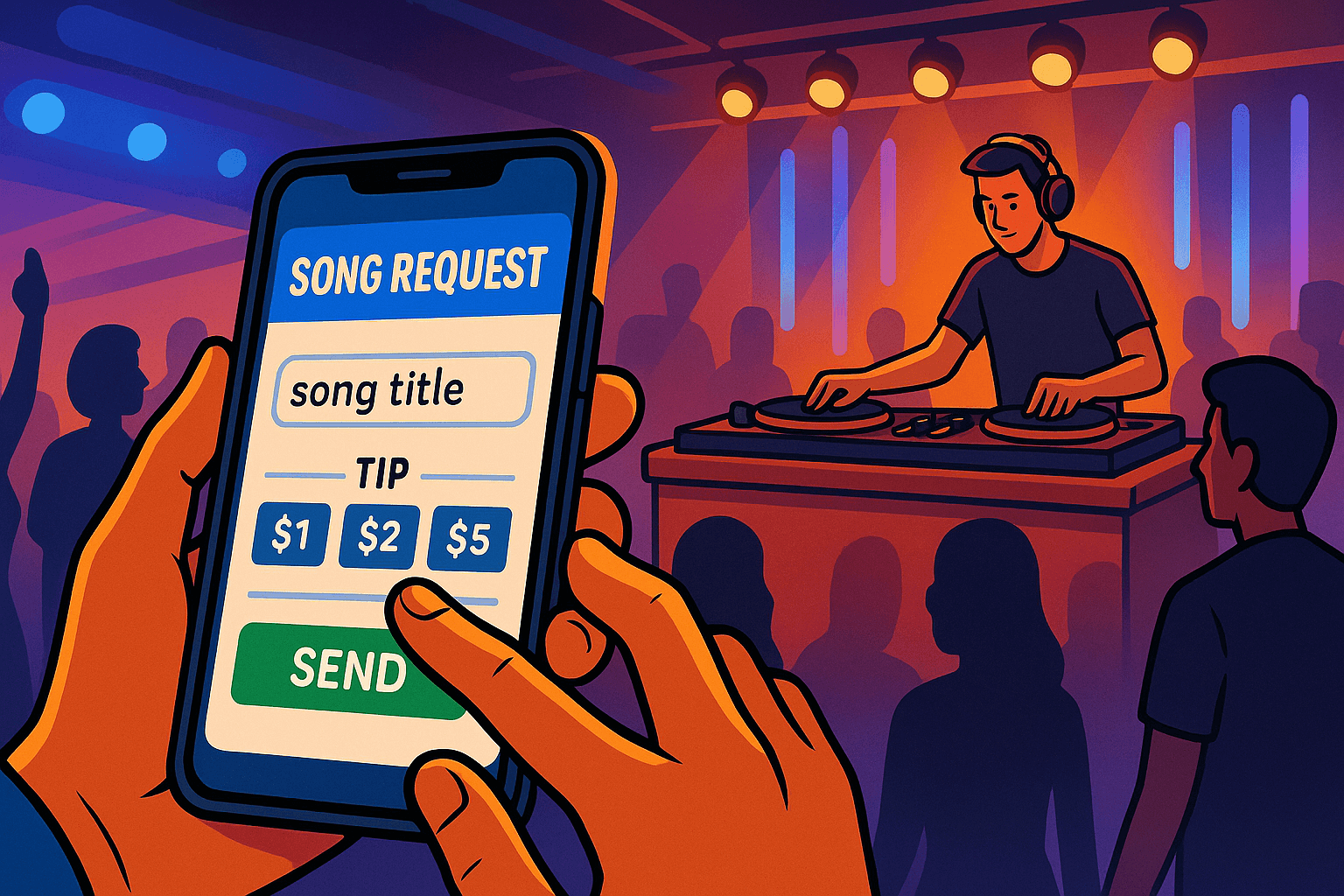
Tribute: Bridging the Digital Tip Jar Gap for Live Musicians
Cash is dead, and with it, the musician's tip jar. We built Tribute to solve a problem every live performer faces: how do you collect tips when your audience doesn't carry cash and Venmo requires knowing someone's username?
The Problem: When Digital Payments Left Musicians Behind
Walk into any coffee shop, bar, or street corner where musicians perform, and you'll see the same thing: a lonely tip jar collecting dust while audiences tap their cards and phones for everything else. The shift to digital payments happened fast, but the infrastructure for tipping live performers never caught up.
Venmo and Cash App work great when you know someone's handle, but they're useless when you want to tip the guitarist whose name you don't know. QR codes help, but they're static—you can't request a song or send a message along with your tip. The connection between performer and audience gets lost in the transaction.
Building Real-Time Connection
Tribute creates a live channel between performers and their audience during shows. Fans can find nearby artists using location services, send song requests, leave messages, and tip directly—all while the performance is happening. When someone sends a tip, it goes straight into the artist's account. No waiting, no processing delays.
The app works in real-time because that's when the magic happens. A song request sent during the second set hits different than one sent the next day. A tip sent right after a killer solo feels like applause. We built Tribute to capture those moments when they matter most.
The Technical Stack: APIs That Actually Work
We leaned heavily on proven APIs to handle the complex parts. Google Maps powers the location finding so fans can discover who's performing nearby. Google Places handles city lookups and venue information. The Apple iTunes API gave us access to hundreds of thousands of song titles, so when someone requests "that one song by The Strokes," we can help them find the actual title.
The payment processing had to be bulletproof. Tips flow directly from fan to artist without touching our accounts. We're the bridge, not the bank. This keeps things simple for artists and ensures they get paid immediately.
Testing With Real Musicians
Our team includes musicians and music lovers, so we had skin in the game from day one. But we also knew our assumptions needed testing. We brought in working artists throughout development—singer-songwriters, jazz musicians, cover bands—and watched them use early versions during actual performances.
The feedback shaped everything. Artists wanted to see requests grouped by song popularity. They needed a way to acknowledge tips without stopping their performance. They wanted fans to be able to find them again for future shows. Each iteration got closer to something that worked in the real chaos of a live performance.
What We Learned About Building for Live Events
Building for live performance is different from building for office workers or online shoppers. The app has to work when the wifi is spotty, when the artist's hands are busy, and when the audience is three drinks in. Every feature has to pass the "works during a guitar solo" test.
We also learned that the relationship between performer and audience is more complex than we expected. It's not just about money—it's about recognition, connection, and the feeling that someone in the crowd is really listening. Tribute became a platform for that connection, with tipping as one piece of a larger interaction.
The app is live at mytribute.app, connecting artists and fans during performances across the country. For musicians tired of empty tip jars and fans who want to support live music, it's the digital solution that finally makes sense.
If you're building a product that needs to work in the real world—not just in perfect conditions—we'd love to talk about what we learned making Tribute work in dive bars and coffee shops.